Grab a spot in our free 1-hour Idea Clinic Sign up
3 weeks · 9–30 November

Start the thing
you keep not starting.

Three weeks for women who want to build something that changes how technology works for people — a blog, a community, a course, a tool, a company. You come with a problem you care about. You leave with a real first version, a plan for how it could pay for itself, and a much clearer sense of why you're the one doing it.

25
women
3
cohorts
4.5/5
average rating across 3 cohorts

Five things that now exist.

01

A blog about privacy-friendly tools

02

A community coding session

03

A six-week online training on AI stewardship

04

A six-week course for restorative justice practitioners

05

A personal website, launched

Three weeks. Six live sessions.

Nine topics, two live sessions a week. Every week pairs the practical build work with the money side and the personal side — because in practice they're the same problem. Research on first-time founders keeps finding the same two killers: building something before checking anyone wants it, and running out of focus or energy before it lands. We designed the three weeks around both.

Week 1 · 9–15 NovFind the problem, and who has it
1

Identify a problem you love solving

One problem, in one sentence, and why it's yours.

2

Designing for your audience

Who it's for, and your first real conversation, done live with us.

3

Connecting with your true purpose

Why you keep coming back to this, and what you want from it.

Week 2 · 16–22 NovDecide, build, check it works
4

Stop scoping, start deciding

Choose the smallest thing you can finish this week.

5

Test your ideas before building them

Find out people want it before you spend months on it.

6

Responsible design methods

Who could be left out or harmed, and how to catch it early.

Week 3 · 23–30 NovMake it last: money and mindset
7

How this could pay for itself

Business models, pricing, funding and grants.

8

Talking about it without shrinking

Tell people what you've made, in your own voice.

9

A pace you can actually keep

A next-step plan built around your real life.

A problem you can name A first version, made and shared A way it could pay for itself A next step you can keep to

"Who am I to build
something like this?"

You see what AI and technology are doing to communities that were never asked. You've had the idea for the thing that would help. And then that sentence arrives.

The people deciding what technology does to all of us are mostly people who simply began. You already have the part that can't be shortcut — you understand the problem. The rest is a set of skills, and that's what these three weeks are.

If one of these is yours, come.

›"Who am I to do something like this?"

The sentence we hear most. It doesn't dissolve through pep talk — it dissolves when five people tell you the problem is real and someone uses the thing you made.

›"I only have a problem, not an idea"

Perfect. That's where everyone starts here, including people who arrive with a finished plan.

›"I've never built anything"

Neither had most people whose products you use. You bring years of understanding a real problem. We bring the making.

›"I've been researching this for two years"

And still not started. We'll put a gentle deadline and a group of women around you, and you'll make the decision you've been carrying.

›"I'm afraid it won't be any good"

It probably won't be, first time. That's the design. First versions are meant to be rough — that's how they teach you anything.

What you'll leave with

A problem you can say out loud, and know is real.

A first version of your thing, made and shared.

A business model: how this could earn, who would pay, where funding exists.

A clearer sense of why you're the one doing it — and a pace you can keep.

Safe to get it wrong.

Rough drafts only

Nothing you share here is meant to be finished. The messy version is the one we work with.

1:1 time with us

Not just group calls. You get individual sessions, so the advice is about your thing, not a general case.

Nobody gets lost

The cohort is small on purpose. We facilitate for a living, and we can see the whole room.

Short on purpose, small on purpose.

Six live sessions

Two a week, 1.5–2 hours, online and in English. Recorded if you miss one.

Everything in one place

Templates, scripts and tools, organised by session and yours to keep.

Money and mindset together

How it could earn, and how you keep going. Both, every week — not business skills in one place and wellbeing in another.

A small cohort

Capped, so everyone is seen. When it fills, the next one opens.

About 6–8 hours a week

Three to four live, the rest your own. We'd rather tell you the real number.

Session times

Two live sessions a week, late afternoon or evening CET.

Who you'll be building with.

Anna Ackermann
Anna Ackermann
Co-founder · Facilitation & Learning Design

Anna came to technology through political science and sociology — the questions she cared about, power and access and who gets left out, kept turning out to be technology questions. She went from digital rights research in Brussels into the innovation ecosystem at UnternehmerTUM, Europe's leading start-up hub, where she worked on social entrepreneurship and early-stage venture building. At the United Nations she then guided 30+ teams through innovation programmes, with country offices in Liberia, Bhutan, Ethiopia, Jordan and Montserrat.
UnternehmerTUM Digital rights UN system Facilitation
Nithima Ducrocq
Nithima Ducrocq
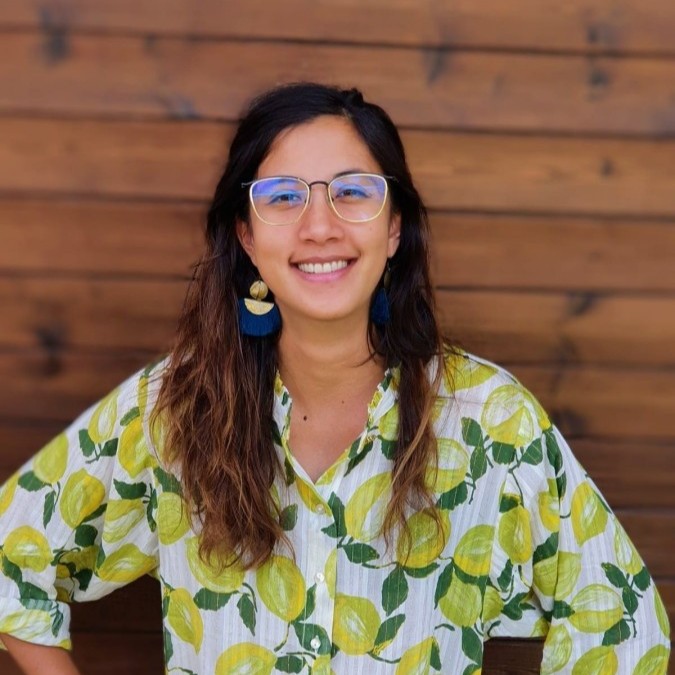
Co-founder · Service Design & Digital Innovation

Nithima is a two-time founder, including a women's health tech start-up that reached over 100,000 users. She now works as a service designer and digital innovation consultant across Southeast Asia, Africa, Europe and Latin America — with startups, local NGOs, and organisations including UNDP, WFP, IOM, FHI360, Impact Hub and MSF. She has built the thing herself, twice, and knows what the early months actually feel like.

Service design UNDP · WFP · MSF 2x founder Women's health tech

What participants actually said.

These are from our earlier cohorts, which focused on career direction. The facilitation and the exercises carry straight over into the studio.

"This course was so interesting: full of surprises, plenty of exercises to reflect on our career, resources, reflections regarding the impact of tech... It gave me a push to be more active and it gave me direction. The two facilitators are lovely"
Past participant
"Great course, well organized and thought through! Many thanks to the organizers availability :)"
Past participant
"This course has several thoughtful exercises that make you reflect on your strengths, weaknesses, aspirations, tendencies and limiting beliefs. The course also compels you to take actionable steps to overcome some of the fears that you might face as a woman in tech like applying to a job that you think you're under-qualified for. Overall, this course really helped me find alignment in the tech for good space and make sense of my career so far specially with why certain opportunities worked and others didn't. I also developed the confidence to start something of my own and not worry too much about the outcome."
Past participant

Pay What You, Can.

If money is the reason you wouldn't apply, apply anyway and tell us on the form.

If the price is a barrier for you — for whatever reason — it's pay-what-you-can. Just tell us on the form, and that's the end of it.

After the three weeks

Everyone gets a group check-in 30 days later, free. If you want us alongside you while you keep building, there's a paid support phase — we'll tell you about it at the end, when you know whether you want it.

Not sure which is yours? Write to us — we'll figure it out together.

Before you talk yourself out of it.

›I don't have an idea yet. Can I still come?

Yes, and it's the better starting point. Bring a problem you keep noticing — in your field, your community, your own life.

›What kind of thing can I build?

A blog, a newsletter, a podcast, a community, a campaign, a course, a service, a tool, a company. If it responds to a problem and other people will meet it, it counts.

›Do you cover how to make money from it?

Yes. Week 3 is business models, pricing, funding and grants — how a project like yours could earn, and who would pay for it. Plenty of people arrive wanting to get paid for work they actually care about, and we treat that as a legitimate goal rather than a sell-out.

›Do I need technical skills?

No. Most first versions here aren't software at all. When yours needs to be, we'll show you what to use and what you can fake.

›Will it be finished at the end?

No — three weeks gets you a real first version and a clear sense of what it needs next. That's a much better place to stand than three more weeks of planning.

›What if it doesn't work?

Then you found out in three weeks, surrounded by people who were rooting for you. Changing direction is a result, not a failure, and we treat it that way.

›I have a full-time job. Is this realistic?

It's built for people who do. Sessions sit outside standard working hours, and the work between them is around three to four hours a week.

›Is it only for women?

The cohort is for women, including trans women, and for non-binary people who find the space relevant.

Next cohort runs 9–30 November

Three weeks from now,
you could have created it.

Small cohort, so places are limited. The application takes about five minutes.

Apply for the November cohort